


The MonitAnt project invites everyone - from hikers to forest enthusiasts - to help monitor the distribution of red wood ants across Europe!
Red wood ants (mound-building Formica species) are keystone species in temperate and boreal European forests. Their activities and nests host many other organisms, enhance soil fertility, disperse seeds, and act as natural pest controllers. Because they react quickly to environmental changes, they are excellent bioindicators of forest health and biodiversity.
Yet their populations are threatened by habitat loss, forest fragmentation, climate change and land-use shifts, causing local extinctions. To protect them and the essential roles they play, we need a clearer picture of where they thrive and how their colonies evolve.
MonitAnt brings citizens and scientists together to document these remarkable insects. By combining simple field observations and photographs, the project reveals nest distribution, responses to environmental changes, and the conditions that keep colonies healthy. It also investigates the many small organisms living inside the nests and their interactions. As a Europe-wide collaboration, observations from Belgium are especially important – every local report counts!
Citizens can participate while walking in forests, edges, clearings or along trails: look out for mound nests. When you find one, observe the ants, note their activity, take multiple photos, and submit your observation via the submission tools. More information about the project is available on www.monitant.de  . For more information about participation and the submission tool, visit www.monitant.de/how-to-participate/ .

Explore and collect nature’s hidden sounds with DASA. By exploring and recording bat calls, citizens help scientists understand and protect them.
Many animals produce unique sounds, from birds' and bats' calls to whales' songs and insects' chirps. The Digital Animal Sound Archive (DASA) is a Belgian collection project that aims to bring together these sounds in one place so that they can be explored and studied for a better understanding of wildlife.
The project’s current focus is on bats, collecting their calls to create a robust digital reference collection. Designed to grow over time, the archive can eventually include other animal groups. In partnership with Natuurpunt and Natagora, two Belgian NGOs involved in nature conservation, DASA engages both professional researchers and citizen scientists, who contribute recordings and help validate the data.
Sounds are particularly important for monitoring bats as many species are difficult to study due to their discreet behaviour and the inaccessibility of their roosts. By recording bats during their nightly activities (hunting, social interactions, migration), acoustic monitoring complements traditional roost surveys and provides essential data for understanding population trends, habitat use and species distribution.
All visitors can use the sound archive to explore recorded data by species, location, and more. Both experienced citizen scientists and professionals can also become members of the site to be able to download and listen to recordings and improve identifications. Every upload and validation of data adds to a shared picture of Belgium’s wildlife and helps to protect the places we all love.
More information about the project is available on the BELSPO website and dasa.naturalsciences.be .

In order to be able to observe and monitor wild bird populations, “ringing” is used as a tool. This makes it possible to study migration and demographics. Bird Ringing Centers are hosted in scientific institutions and in Belgium, the center goes under the name BeBirds and is embedded in the Royal Belgian Institute of Natural Sciences.
As a citizen you can become a bird ringer and if you find a ringed bird, you are kindly asked to let the BeBirds know.
More information is available on the BeBirds website .
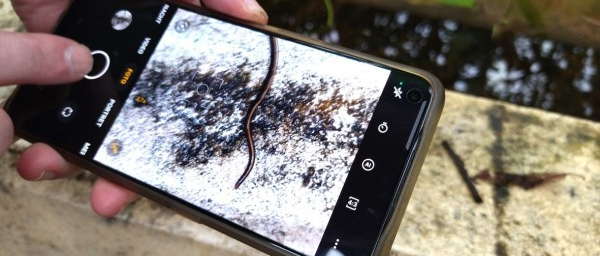
FlatwormWatch aims to elucidate which species of non-native terrestrial flatworms are already present in Belgium with the help of citizens. Besides making an inventory of species already observed in Belgium, the project also aims to map the distribution of the species in question, to get an idea of how these species entered our country and to create awareness of the risks of non-native flatworms. These non-native flatworms can have a large impact on biodiversity as they are voracious predators.
As a participant of the project, you will actively look for this hidden species group in different places such as you garden or greenhouse.
More information on the project can be found on the websites of the Royal Belgian Institute of Natural Sciences (in Dutch or French ) and the Belgian National Scientific Secretariat on Invasive Alien Species .


